
From Vibe-Coded Prototype to Production SaaS: What It Actually Costs to Rebuild (2026)
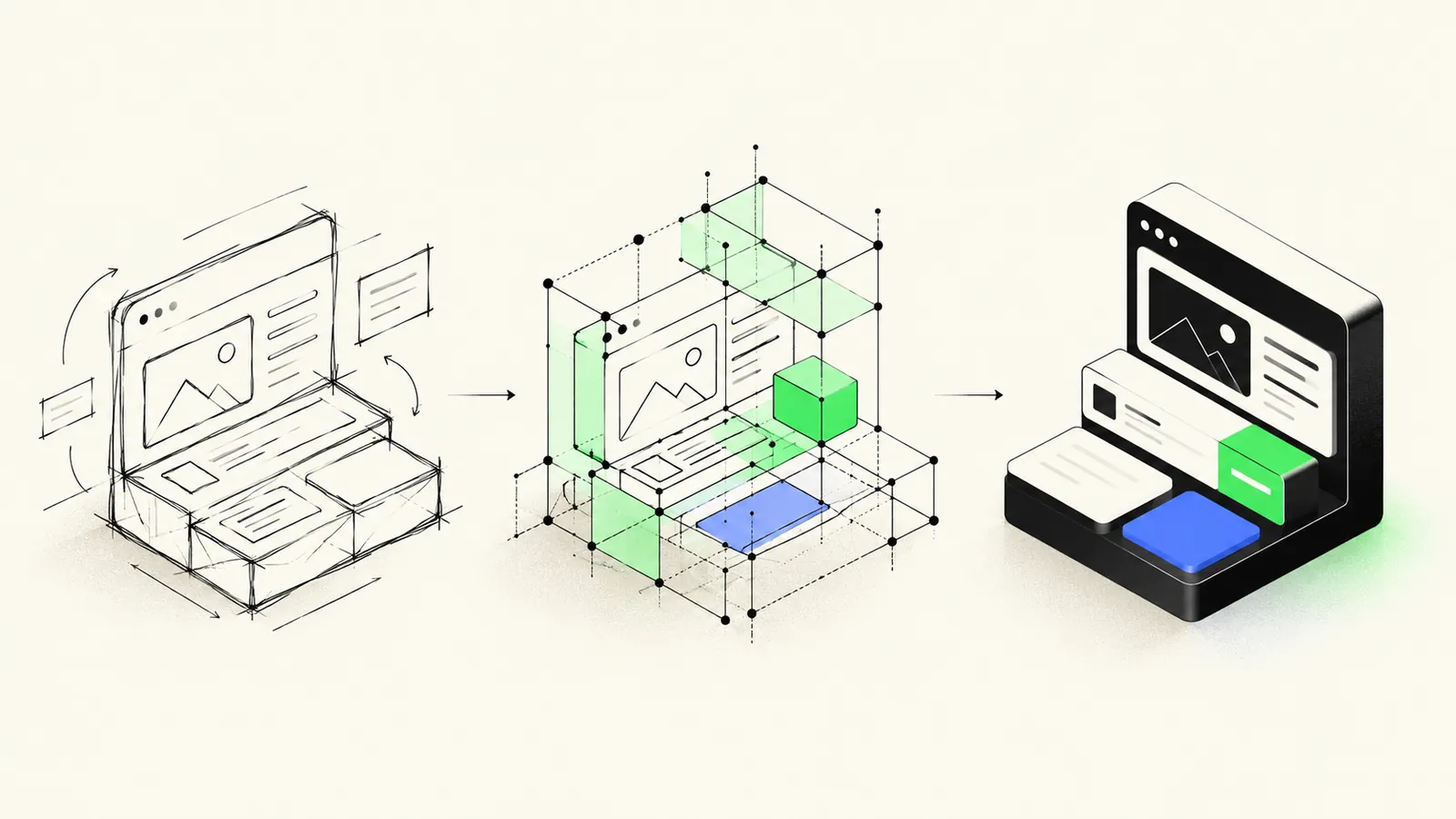
A founder shows us a product that already has paying users. It was built in a few weeks with an AI builder (Lovable, Bolt, Replit, v0, Cursor) and it demos beautifully. Then the questions start: a user saw someone else's data; Stripe webhooks aren't verified; the database fell over at a few hundred signups; nobody on the team can actually explain how auth works. The prototype worked. Production is where the bill comes due.
This is the honest, evidence-backed guide to what comes next: whether to refactor or rebuild, what it costs in 2026, and the decision table we actually use. We can write it without hand-waving because we work on both sides of it: Keplaris builds SaaS products on the stack these prototypes use (Next.js, TypeScript, Node, PostgreSQL, Stripe) and rescues client builds. So this is the view from engineers who harden auth, payments, and tenancy for a living, not a generic legacy-cleanup pitch.
What "vibe coding" actually is, and why the definition decides everything
Andrej Karpathy coined the term on Feb 2, 2025: "fully give in to the vibes… forget that the code even exists." Simon Willison drew the line that matters: vibe coding means not reviewing the code; responsible AI-assisted coding still reviews and tests it.
That distinction is load-bearing for your whole decision. A low-risk refactor depends on someone understanding the system. If no human on your side understands what the AI generated, you've already failed the precondition for a safe refactor, which pushes the case toward rebuild. So before any cost estimate, answer one question honestly: does anyone here actually understand this codebase?
This is mainstream now, not an edge case
If you're here, you're not unusual. Per YC's Jared Friedman, about 95% of the code was LLM-generated for 25% of the Winter 2025 batch (TechCrunch), and 84% of developers now use or plan to use AI tools (Stack Overflow 2025). A large, growing population of founders is about to hit the production wall. The good news: the failure modes are well understood, and so are the fixes.
Why it works in the demo and breaks in production
The gap isn't bad luck; it's systemic. Veracode's 2025 GenAI Code Security Report tested 100+ models and found 45% of AI-generated code introduced an OWASP Top 10 vulnerability, with defenses against cross-site scripting failing 86% of the time, and no improvement from newer or larger models. You can't wait for a better model to fix this.
Two more findings explain the lived experience:
- AI is an amplifier, not a safety net. DORA 2025 found AI raises both delivery throughput and instability: it amplifies strong engineering systems and weak ones alike. A solo founder with no tests, CI, or review discipline is the weak-system case by definition.
- The "almost right" tax. Stack Overflow 2025: 66% cite AI output that's "almost right but not quite," 45% say debugging AI code takes longer, and distrust (46%) now outweighs trust (33%).
The failure modes have names and CVEs
This isn't abstract. The auth/payment/security wall shows up as documented incidents:
- Missing authorization at the platform level. CVE-2025-48757 (CVSS 9.3, Incorrect Authorization): a missing Row-Level Security default let unauthenticated attackers read or write arbitrary tables. The vendor disputes it, which is exactly the buyer's lesson: the platform will not own your rebuild.
- Leaked secrets at scale. GitGuardian's State of Secrets Sprawl 2026 found 28.65 million new hardcoded secrets added to public GitHub in 2025 (+34% YoY), with AI-service secret leaks up 81%. Assume any key committed during prototyping is already compromised: rotation is step one.
- No prod/dev isolation. Publicized cases of AI agents deleting a production database during a code freeze are evidence that prototypes routinely ship with no environment separation, backups, or rollback.
Refactor vs. rebuild: the test we actually run
Forget "what percentage of the code gets rewritten." The real question is architecture and the authorization boundary:
- Refactor when the app is modular, the data model is sound, and failures are localized: leaked keys, a missing RLS policy, client-side gating you can move server-side.
- Rebuild when debt is pervasive, the core architecture is incompatible (no real multi-tenancy, payments validated in the browser), or no one understands the code.
- The honest middle, and where most AI MVPs land, is hybrid: keep the validated UI/UX and product spec, rebuild the backend, data model, and auth. A Strangler Fig approach lets you do this while live customers keep running.
You can't refactor your way out of an app that never had an auth boundary.
The numbers, side by side
| Approach | Typical trigger | What survives | Rough cost & timeline* | Risk to live customers | Who you hire |
|---|---|---|---|---|---|
| Targeted hardening (refactor) | Leaked keys, missing RLS, client-side gating | Most of the app | ~$5K-$30K · 1-4 weeks | Low | A senior engineer (short engagement / staff aug) |
| Hybrid rebuild | Sound frontend, unsafe backend/data/auth | UI/UX, product spec | ~$30K-$80K · 1-3 months | Medium (run in parallel) | A small senior team / studio |
| Full greenfield rebuild | No multi-tenancy, client-side payments, unmaintainable | Spec & lessons only | ~$50K-$150K+ · 3-5 months | Higher | A studio that owns architecture + security |
*Directional ranges, not quotes: industry rules of thumb put a rebuild near 2.4× the original build cost, and the audit sets the real number. See our companion guide on what a SaaS MVP costs in 2026 for greenfield budgeting.
Verdict: hardening if failures are localized and the data model is sound; hybrid if the frontend is worth keeping but the backend isn't; full rebuild only when the architecture can't carry real tenants or payments.
What "production-ready" actually means (the checklist we verify)
Before we'd call any AI-built app production-ready, we verify:
- Server-side authorization on every endpoint: never client-side gating
- Row-level security / tenant isolation enforced at the database (how Postgres RLS leaks, tested)
- Secrets in a manager, with every prototype key rotated
- Payment flows validated server-side, with webhook signature verification
- Separate prod/dev environments, with backups and rollback
- A third-party vulnerability scan before launch
Each line maps to a documented 2025-2026 failure above. These are the same items we build into client SaaS products from the start, so a rescue is measured against them line by line. Once several paying tenants share one API, add per-tenant limits that return a 429 with Retry-After, so one customer's batch job can't slow everyone else down.
Why "just have the AI fix it" usually makes it worse
The instinct is to point the AI at the problem. Two pieces of evidence argue against it:
- METR's randomized controlled trial: experienced developers were 19% slower with AI tools on mature repositories, despite predicting a 24% speedup and believing afterward they were 20% faster (METR). The AI speed advantage is front-loaded into greenfield prototyping and shrinks once the code is real. (Scope: experienced devs, mature repos, early-2025 tools.)
- AI adds code; it doesn't consolidate it. Across 211M changed lines, copy-pasted code rose from 8.3% to 12.3% while refactored "moved" code fell from ~24% to under 10%. Iterative prompting also tends to degrade security further.
So your own intuition about how fast a rebuild will go is the least reliable input in the whole decision.
How to decide who to hire, and what you're actually buying
Map the diagnosis to the engagement:
- Leaked keys / missing RLS / client-side gating: a short senior engagement (staff augmentation, rent our senior developers). Cheapest path when failures are localized.
- No multi-tenancy / client-side payments / no one understands it: a studio rebuild, where accountability for architecture and security is the product (product design & engineering).
Freelancers run ~30-50% cheaper hourly but you absorb QA, backups, and continuity risk; staff augmentation is often cheaper in total for 6+ month work; a studio bundles architecture, security review, PM, QA, and delivery accountability (directional market figures, not quotes).
We apply this exact framework to client builds and rescues. If you're sitting on a vibe-coded app that's outgrowing its foundation, talk to us, we'll run the audit honestly, and tell you to refactor when that's the right answer.
Frequently asked questions
Can I just keep prompting the AI until my prototype is production-ready?
Usually not. Veracode tested 100+ models and found 45% of AI-generated code introduces an OWASP Top 10 vulnerability, with no improvement from newer or larger models, so you can't wait for a better model to fix it. And iterative prompting tends to add code rather than consolidate it. Getting to production is an architecture and review problem, not a prompting problem.
How much does it cost to rebuild a vibe-coded app into a production SaaS?
It depends on what survives an audit. A targeted hardening (rotate leaked keys, add server-side authorization, enforce database row-level security) often runs roughly $5,000-$30,000. A production-grade rebuild commonly lands around $50,000-$150,000 in the US, and industry rules of thumb put a rebuild near 2.4× the original build cost. Treat these as directional ranges: the audit sets the real number.
Should I refactor or rebuild my AI-generated MVP?
Refactor when the app is modular, the data model is sound, and failures are localized (leaked keys, a missing row-level-security policy, client-side authorization). Rebuild when debt pervades the codebase, the core architecture is incompatible (no real multi-tenancy, payments validated client-side), or no one understands the code. Most AI MVPs land in between: keep the validated UI and product spec, rebuild the backend, data model, and auth.
Is AI-generated code actually insecure, or is that hype?
It's measured, not hype. Veracode found 45% of AI-generated samples introduced an OWASP Top 10 flaw and that defenses against cross-site scripting failed 86% of the time. A real platform-level case, CVE-2025-48757 (CVSS 9.3), let unauthenticated attackers read or write arbitrary data because row-level security wasn't enforced by default. Assume any keys committed during prototyping are already compromised.
Won't AI make the rebuild fast and cheap?
Not on a real, maintainable codebase. In a randomized controlled trial, METR found experienced developers were 19% slower with AI tools on mature repositories, even though they predicted a 24% speedup and believed afterward they were 20% faster. The speed advantage is front-loaded into greenfield prototyping and shrinks once the code is real, so your intuition about rebuild effort is the least reliable input.
What does 'production-ready' actually require for a SaaS?
At minimum: server-side authorization on every endpoint (never client-side gating), row-level security or tenant isolation enforced at the database, secrets in a manager with every prototype key rotated, payment flows validated server-side with webhook signature verification, separate production and development environments with backups and rollback, and a third-party vulnerability scan.
Get in touch.
Whether you have questions or just want to explore what's possible, we're here to help.