
The 2026 AI Wave: New Models, Agent Orchestration, and What It Actually Means for Your Business
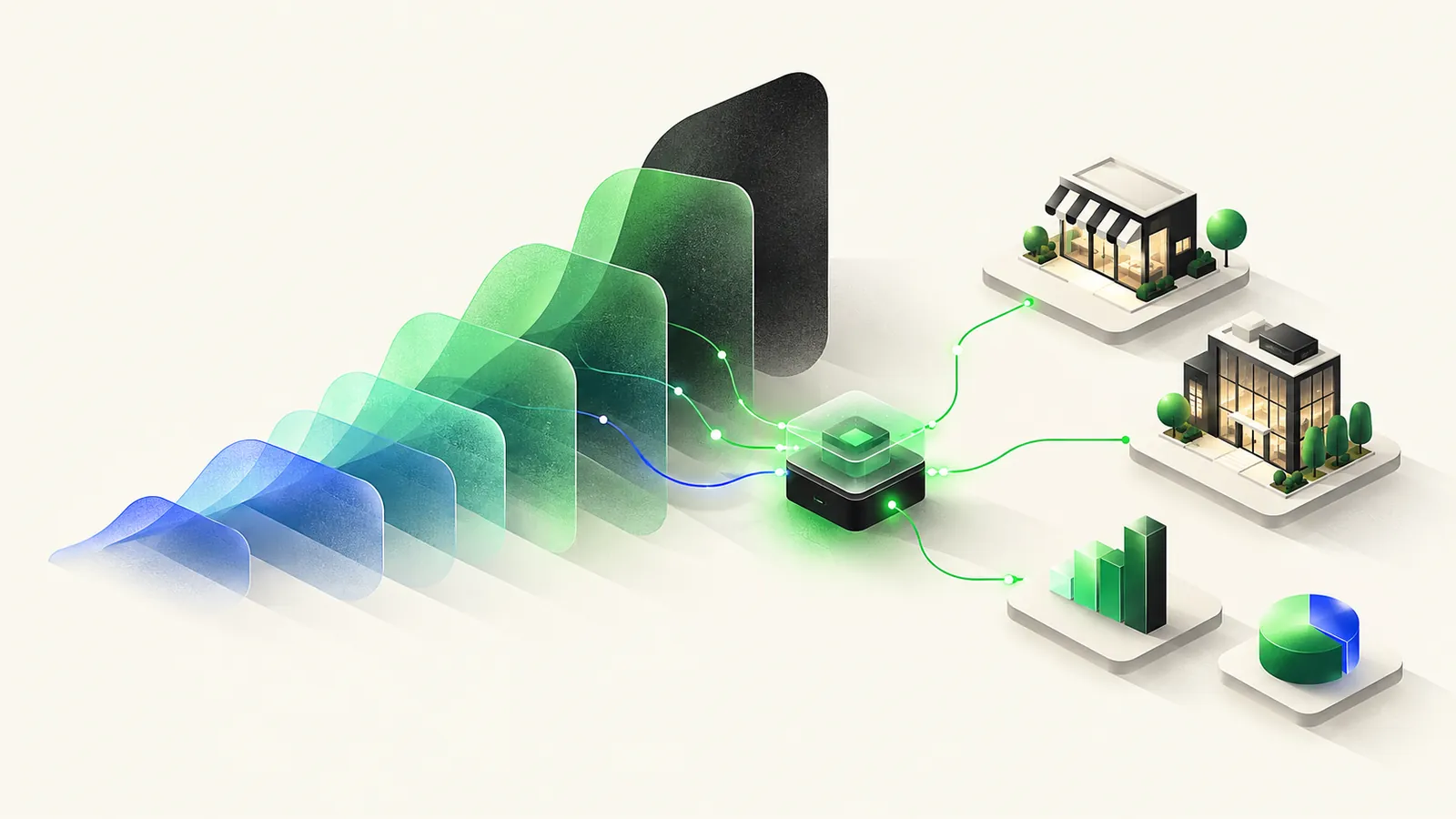
The first half of 2026 compressed what used to be a year of AI progress into a few months: million-token context windows became the default on frontier models, single chatbots gave way to coordinated teams of specialized agents, and the Model Context Protocol quietly became the integration standard that makes all of it pluggable. For most businesses, the takeaway is not "adopt everything"; it is that the cost of doing real work with AI dropped sharply, while the gap between a flashy demo and a reliable production system stayed exactly as wide as it was.
The Model Race Sped Up, and the Economics Shifted Underneath It
The headline releases came fast this spring. Anthropic shipped Claude Opus 4.8 in late May with a 1-million-token default context window and a return to the top of the coding benchmarks, then followed with its new Claude 5 family. Google launched Gemini 3.5 Flash at I/O, tuned for speed at low cost. Microsoft unveiled its own MAI model family, including MAI-Code-1 for code generation, explicitly to reduce its reliance on OpenAI and lower costs for developers. Even Apple moved, announcing a Gemini-powered Siri and offering Claude as an iPhone assistant option.
Benchmark leaderboards reshuffle monthly and mostly do not matter to you. Two underlying shifts do:
- Context windows stopped being the bottleneck. A million tokens means a model can hold an entire codebase, a full contract archive, or a year of support tickets in a single request. Workflows that previously required elaborate chunking-and-retrieval pipelines (with all their engineering cost and failure modes) can now often be a single, simpler call.
- Capable intelligence got cheap. The fiercest competition in 2026 is not at the frontier; it is in the fast, inexpensive tier: Gemini Flash, Microsoft's MAI line, smaller Claude models. Tasks that were not economical to automate at 2024 prices, like classifying every inbound email or summarizing every sales call, now cost fractions of a cent each.
The practical implication: if you scoped an AI project in 2024 or early 2025 and shelved it on cost or capability grounds, that math is stale. It is worth re-running.
Agents Grew Up: From Chat Windows to Orchestrated Teams
The bigger story than any single model is architectural. The industry has moved from "a chatbot answers questions" to multi-agent orchestration: systems where a coordinating agent plans a task, delegates pieces to specialized agents that work in parallel, and assembles the results. Google Cloud's 2026 agent trends report and Salesforce's both point the same direction: single-threaded assistants are giving way to coordinated agent teams, because complex work simply exceeds what one agent's context can hold.
What made this practical is standardization. The Model Context Protocol (MCP) gives agents one common way to call tools, query databases, and talk to services, and with more than 10,000 public MCP servers deployed, the integration work that used to be the most expensive part of any agent project has collapsed. Connecting an agent to your CRM, your billing system, and your internal database no longer means three bespoke integrations. It means three connectors that speak the same protocol, swappable independently of which AI vendor you use.
For a business, this changes the shape of what is worth building:
| Then (2024 to 2025) | Now (mid-2026) |
|---|---|
| One assistant, one narrow task | Agent teams handling multi-step processes end to end |
| Custom integration per tool, per vendor | Standard MCP connectors, reusable across models |
| Locked to one AI provider's ecosystem | Model-agnostic systems; swap providers as prices move |
| RAG pipelines to work around small context | Whole datasets in context; simpler architectures |
The Production Gap Is Where Projects Die
Here is the number that should temper the excitement: by Q1 2026, roughly 80% of enterprise applications shipped with at least one embedded AI agent, but only about 31% of organizations have an agent actually running in production. The gap between "we tried it" and "it runs our process" is enormous, and it is not a model-capability gap. The models are good enough. It is an engineering gap.
The projects that stall share a pattern. They were built as demos: no evaluation suite to catch regressions when prompts or models change, no fallback path when the model returns something malformed, no human checkpoint before the agent does something consequential, no monitoring to notice quality drifting. A demo that works 80% of the time gets applause. A production system that fails 20% of the time gets turned off.
The projects that make it through treat the AI component the way good teams treat any unreliable dependency:
- Scope to a process, not a technology. "Automate invoice intake and matching" survives contact with reality; "add AI" does not.
- Build evaluation before building features. A test set of real cases with known-correct answers is the only way to know whether a prompt change, model upgrade, or vendor switch made things better or worse.
- Keep humans on the consequential edges. Let agents do the gathering, drafting, and cross-checking; route approvals and exceptions to people. This is also what makes compliance and audit conversations survivable.
- Instrument everything. Log inputs, outputs, costs, and corrections. The teams reporting real gains (engineering leaders report a net productivity improvement around 19%, with typical time-to-value around five months) are the ones who can measure it.
What This Means for Your Business, Concretely
Cutting through the news cycle, three moves are worth considering this year:
- Re-scope the shelved projects. Anything you priced out in 2024 to 2025 (document processing, support triage, sales-call analysis, code modernization) is cheaper and more reliable to build now, often with a simpler architecture thanks to large context windows.
- Pick processes with clear inputs, outputs, and volume. The best first candidates look like the ones we describe in our workflow automation guide: repetitive, rule-heavy, high-volume, currently consuming skilled people's hours.
- Insist on model-agnostic architecture. The vendor landscape is reshuffling quarterly: Microsoft building its own models, Apple mixing Google and Anthropic, prices dropping every release cycle. Systems built with a clean abstraction between business logic and model provider turn each reshuffle into an opportunity. Systems hard-wired to one API turn it into a rewrite.
Where Keplaris Fits
This is the work we do. Keplaris designs and builds automation and AI systems for companies that want the productivity gains without becoming AI research teams themselves: agent workflows connected to your real tools over MCP, evaluation harnesses that make upgrades safe, and human-in-the-loop checkpoints where judgment matters. When the AI capability is part of a larger product, our Product Design & Engineering and API & SaaS development practices carry it from prototype to production.
Conclusion
The mid-2026 AI wave is real, but the advantage does not go to the companies that adopt the newest model fastest. It goes to the ones that pick a process that matters, engineer the system around reliability rather than demos, and stay flexible enough to ride each price and capability drop as it lands. The models will keep changing every quarter. A well-built system makes that a line-item improvement instead of a crisis.
If you are deciding which process to start with, or you have a prototype that needs to survive production, a short conversation with our team usually surfaces the two or three workflows worth tackling first.
Frequently asked questions
Do I need to switch AI models every time a new one is released?
No. If your system is built with a clean abstraction layer between your business logic and the model provider, upgrading is a configuration change you make when the price or capability difference justifies it, not a rebuild. The companies that struggle are the ones that hard-coded a single vendor's API throughout their stack.
What is the Model Context Protocol (MCP) and why does it matter for my business?
MCP is an open standard that lets AI agents connect to tools, databases, and services through one common interface instead of custom integrations for each pair. With over 10,000 public MCP servers available, it means connecting an agent to your CRM, database, or internal tools is now weeks of work instead of months, and you are not locked into one AI vendor to do it.
Why do so many AI agent projects never reach production?
Most stall on reliability, not capability. A demo that works 80% of the time is impressive; a production system that fails 20% of the time is unusable. Getting to production requires evaluation suites, fallback paths, human review for consequential actions, and monitoring: engineering work that the demo phase skips.
Get in touch.
Whether you have questions or just want to explore what's possible, we're here to help.