
How Much Does AI Development Cost in 2026? (An Honest Budget Breakdown)
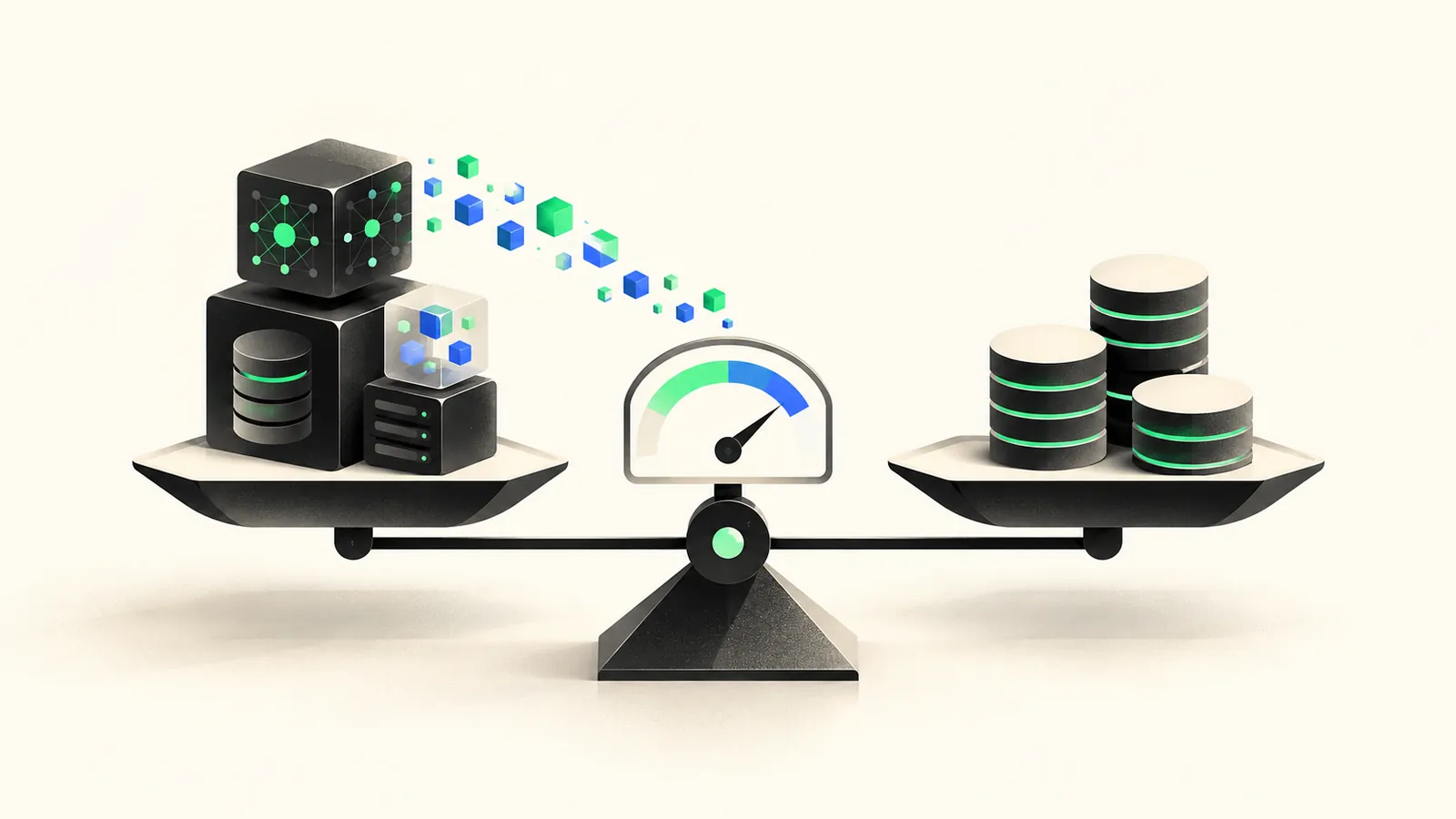
Ask what AI development costs in 2026 and you'll get the same answer pattern everywhere: one scary-wide range ("anywhere from $10,000 to $500,000!") followed by a pitch to book a call. We're going to be more useful than that. At Keplaris we build AI features for clients, which means scoping the engineering cost and the inference bill that keeps arriving after launch. Here's what the numbers actually look like, tier by tier, including the parts a quote rarely shows you.
The honest answer: price the capability tier, not "AI"
"AI development" spans four very different projects. The single biggest budgeting mistake is pricing tier 3 ambition with a tier 1 budget.
| Tier | What it is | Typical cost | Timeline |
|---|---|---|---|
| AI feature | Summarize, draft, classify, extract: one model call wired into your product | $5K-$25K | 2-6 weeks |
| RAG assistant | Chat/answers grounded in your data (docs, tickets, product data) | $20K-$80K | 6-12 weeks |
| Production agents | AI that takes actions: tools, multi-step workflows, guardrails, evals | $50K-$150K+ | 3-6 months |
| Fine-tuned / custom | Custom-trained models, dedicated infra | $100K-$500K+ | 4-12 months |
Two things move you up a tier faster than founders expect: actions (the moment AI can do something, such as sending, updating, or deleting, you're paying for guardrails, permissioning, and evaluation) and your data (the moment answers must be grounded in your own content, you're paying for retrieval infrastructure and data cleanup).
The model API is the cheapest line on the budget
Founders consistently budget backwards: they worry about API costs and hand-wave the engineering. The reality is the opposite. Per-token pricing across major providers currently spans roughly $1-$10 per million input tokens and $5-$50 per million output tokens depending on model tier (Anthropic's pricing is representative). For a typical SaaS feature (say, tens of thousands of requests a month with a few thousand tokens each), that's tens to a few hundred dollars a month. A rounding error next to one week of senior engineering.
Where the money actually goes:
- Data readiness. The AI is only as good as what it reads. Cleaning, structuring, chunking, and permission-scoping your content is routinely the largest single line item in a RAG build, and it's almost always underestimated, because nobody thinks of their own data as messy until a retrieval system starts quoting it.
- Evaluation. Without an eval suite (a set of real cases with known-good answers you run on every change), you cannot tell whether a prompt tweak or model upgrade made things better or worse. You're just vibing. Evals are the difference between an AI feature you can maintain and one you're afraid to touch. If you built that suite on OpenAI's hosted Evals platform, it shuts down on November 30, 2026, and our guide to OpenAI Evals alternatives covers exporting and porting it.
- Guardrails and permissioning. What is the AI allowed to see, say, and do, per user, per tenant? For agents, this is the bulk of the work: tool permissions, spending limits, human-approval gates for irreversible actions, and failure handling when (not if) the model does something unexpected.
- Integration and UX. Streaming responses, showing sources, handling "I don't know" gracefully, latency budgets, fallbacks when the provider has an outage. The chat window is 10% of the interface problem.
Budget rule of thumb: 70-90% engineering, 10-30% inference and infrastructure. Any quote weighted the other way is describing a demo, not a product.
The budget killer nobody quotes: pilot purgatory
MIT's NANDA research found that roughly 95% of enterprise generative-AI pilots delivered no measurable P&L impact. That's not a model-quality problem; it's a scoping problem. The failed pattern is always the same: build an impressive demo on clean sample data, skip evaluation, never integrate into a real workflow, quietly shelve it.
The financial lesson for budgeting: the demo is ~20% of the cost; production-readiness is the other 80%. If a quote gets you to "working prototype" and stops, the remaining spend isn't optional; it's just not on the invoice yet. Scope the production path (data, evals, guardrails, integration, monitoring) from day one, or budget to do the project twice.
Run-costs: what AI adds to your monthly bill
The build is one-time; these recur. A realistic monthly picture for a production AI feature:
- Inference, scaled by usage, with three levers that change the number dramatically:
- Model routing: small models for routine calls, frontier models for hard ones. The per-token spread between tiers is 10-50x; routing intelligently is the single biggest cost lever.
- Prompt caching: cached input tokens are typically ~90% cheaper than uncached ones, which is enormous for long system prompts and repeated RAG context.
- Batch processing: non-urgent workloads (nightly enrichment, bulk classification) run at roughly half price on batch APIs.
- Vector database / retrieval infra for RAG: ~$0-$500+/month at SaaS scale.
- Monitoring and eval tooling: either a vendor subscription or the engineering time to run your own; not optional once real users depend on the feature.
- Maintenance: models deprecate, providers reprice, prompts drift as your product changes. Budget the same 15-25% of build cost per year you'd budget for any software. AI does not get a pass on maintenance; it usually needs more.
And set hard spending caps per user and per feature from day one. Every team that skips this step learns why during their first traffic spike or prompt-injection incident. In a multi-tenant product, a plan quota on your own API is the cheapest place to hold that cap; our guide to rate limiting a SaaS API per tenant shows the pattern.
A defensible AI budgeting framework
- Define the measurable outcome first. "Reduce support response time 40%" is fundable; "add AI" is not. This is the same scoping discipline we apply to MVP builds: cut to the outcome.
- Start one tier lower than your ambition. Prove a tier-1 feature or tier-2 assistant creates value before funding agents. The tiers build on each other; the spend doesn't have to arrive at once.
- Buy before you build, prompt before you tune. Frontier model + good prompting + RAG covers most product use cases. Fine-tuning is a standing commitment, not an upgrade you casually check a box for.
- Put evals in the first milestone, not the last. If success isn't measurable by week two, you're building a demo.
- Price the production path up front (data cleanup, guardrails, integration, monitoring), even if you phase it. That's the real number; everything else is the demo number.
- Hold 30-50% in reserve for iteration. The first shipped version of an AI feature is a hypothesis. The value shows up in versions two and three.
Red flags in an AI quote: one price with no capability tier attached; no mention of evaluation; no data-readiness assessment; a "we'll fine-tune a custom model for you" opener; no monthly run-cost estimate; a demo milestone with no production milestone behind it.
How Keplaris prices AI work
We price AI builds the way we price everything: scope cut to the measurable outcome, a senior team, and the production path (data, evals, guardrails, monitoring) in the plan from day one, because we run these systems ourselves and know where the real costs live. AI that ships and holds up beats AI that demos well.
If you're budgeting an AI feature, assistant, or agent (or rescuing a pilot that stalled), see our Automation & AI Systems and API & SaaS Development work, read our take on where workflow automation actually pays off, or just talk to us about the honest number for your scope.
Frequently asked questions
How much does AI development cost in 2026?
It depends almost entirely on the capability tier. Adding a well-scoped AI feature to an existing product (summarization, drafting, classification behind an API call) typically runs $5,000-$25,000. A retrieval-augmented (RAG) assistant grounded in your own data runs roughly $20,000-$80,000. Production AI agents that take actions with tools, guardrails, and evaluation typically run $50,000-$150,000+. Fine-tuning or custom model work starts around $100,000 and climbs fast. Any quote that gives you one number without asking which tier you're in is a sales number, not an estimate.
What actually drives the cost of an AI project, and isn't the model API the expensive part?
No. The model API is usually the cheapest line item. Per-token prices across major providers span roughly $1-$10 per million input tokens and $5-$50 per million output tokens depending on model tier, so a modest feature often costs tens to hundreds of dollars a month in inference. The real costs are engineering: preparing and cleaning the data the AI reads, building evaluation so you can tell whether changes help or hurt, guardrails and permissioning so the AI can't do damage, and integrating the feature into your product's UX and existing workflows. Those routinely account for 70-90% of the budget.
How much does it cost to run an AI feature in production monthly?
For most SaaS features, inference starts at tens to hundreds of dollars per month and scales with usage, but unmanaged, it can balloon. The three levers that keep it sane: model routing (use a small, cheap model for routine calls and reserve frontier models for hard ones, a 10-50x per-token difference), prompt caching (cached input tokens are typically ~90% cheaper, which matters enormously for long system prompts and RAG context), and batch processing (roughly 50% off for non-urgent workloads). Budget for monitoring and evaluation tooling on top, and set hard per-user and per-feature spending caps from day one.
Why do so many AI projects fail to make it past the pilot stage?
MIT's NANDA research found roughly 95% of enterprise generative-AI pilots produced no measurable P&L impact. The pattern behind that number: teams build a demo against clean sample data, skip evaluation, and never wire the AI into an actual workflow with real permissions and real edge cases. The gap between 'impressive demo' and 'production feature users rely on' is precisely where most of the budget belongs (data plumbing, evals, guardrails, and workflow integration), and it's what cheap quotes omit.
Do I need to fine-tune a model, or can I just use an API?
In 2026, the default answer is: use a frontier model via API with good prompting and retrieval (RAG), and don't fine-tune until you've proven the cheaper approaches can't hit your quality bar. Prompting plus RAG covers the overwhelming majority of product use cases at a fraction of the cost. Fine-tuning adds training-data preparation, training runs, hosting, and re-training every time the base model or your data shifts, a standing engineering commitment, not a one-time fee. It earns its keep for narrow, high-volume tasks with tight latency or cost constraints, not as a starting point.
Should I hire an AI agency, use freelancers, or build in-house?
The same logic as any software build applies, with one twist: AI projects fail disproportionately in scoping and evaluation, not in coding. A partner who pushes back on your feature list, insists on defining measurable success criteria before building, and has shipped AI features into production (not just demos) is worth a premium at any tier. Freelancers suit narrow, well-specified integrations; senior studios suit anything touching your core product or customer data. Whoever builds it, make sure you own the code, the prompts, and the evaluation suite at handoff.
Get in touch.
Whether you have questions or just want to explore what's possible, we're here to help.